The Real Cost of Disconnected Tools: How Multiple Vendors Quietly Kill Your Growth
Your tools don't talk to each other. Your team acts as human data bridges. And your profit margins are silently bleeding. Here's how disconnected software creates a hidden tax on your business — and what to do about it.

If you peek at the backend operations of a scaling business, you will almost always find a digital maze.
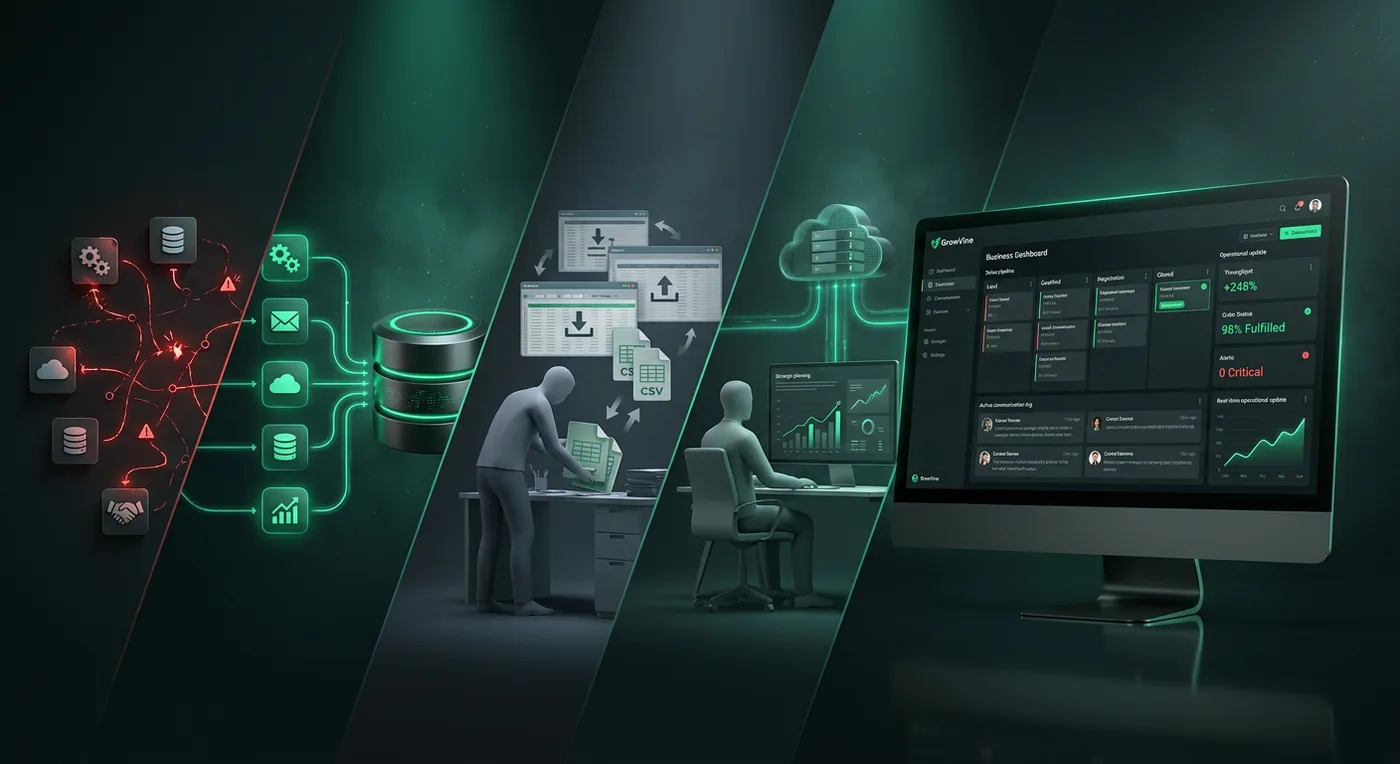
There is one software vendor for customer management, another for booking sales calls, a third for project management, a fourth for sending invoices, and three more handling marketing pipelines. On their own, each of these tools looks like a brilliant, affordable solution designed to solve one specific problem.
But when you zoom out and look at your company as a single, cohesive ecosystem, a dangerous pattern emerges. These tools don't talk to each other natively. They operate as isolated information siloes, forcing your team to act as human bridges—manually moving data across browser tabs, copying text from one window to another, and cross-checking spreadsheets just to get through a basic workday.
This is the hidden tax of disconnected tools. It is an operational bottleneck that quietly drains your team's energy, leaks valuable customer data, and puts a hard ceiling on your company's ability to scale.
Here is exactly how a fragmented multi-vendor tech stack suppresses your growth, and why consolidating your systems is the highest-leverage move you can make for your bottom line.
The Three Invisible Ways Disconnected Software Is Draining Your Revenue
When you use separate, disconnected systems across different departments, you aren't just paying multiple monthly subscription bills. You are paying a heavy operational penalty in three distinct areas:
Data Leakage and Broken Context: When a prospect interacts with your marketing campaign, books a call via an external link, and enters your pipeline, that journey should be a single, unbroken line. If your tools are disconnected, that data breaks. Your sales representative jumps on a discovery call without knowing which specific website case study the prospect read. When context is lost, deals fall through the cracks.
High Operational Friction (Tab Fatigue): Ask your team how much time they waste daily on repetitive, manual tasks. If a team member has to manually download a CSV file from your outreach tool, clean it in Excel, and manually upload it to your CRM just to keep records updated, you are paying human salaries for robotic tasks. This manual friction slows down execution speeds, increases data entry errors, and pulls your top talent away from high-value strategic work.
Fragile API Bridges (The "Zapier Trap"): To fix the lack of communication between tools, many founders build complex spiderwebs of third-party integration bridges. While these work temporarily, they are notoriously fragile. The moment one vendor updates their software interface or changes their data fields, your entire integration chain snaps. Leads stop routing, notifications fail, and your operations grind to a halt.
The Strategic Shift: Moving Toward an All-In-One Ecosystem
True operational leverage happens when your digital systems work together automatically. Imagine a workspace where a prospective client clicks a link on your optimized website, your internal system instantly identifies their profile and syncs it directly to your pipeline, and a personalized outreach sequence triggers based on their exact behavior. When they convert, an onboarding portal automatically alerts your operations team and drafts the initial contract.
This level of automation cannot be achieved by stitching together random, off-the-shelf software packages. It requires an intentional, unified technical infrastructure built to mirror your company's actual real-world workflows.
Driving Growth Through Total System Alignment
At GrowVine, our engineering philosophy is built around a singular focus: guiding businesses smoothly From Vision to Growth. We don't believe in adding more software for the sake of it. Instead, we look at your operational ecosystem holistically to remove technical debt and unlock hidden efficiency.
We apply this same uncompromising standard of optimization to our public-facing digital platforms. For instance, when we design and engineer client E-commerce platforms, we don't just focus on visual aesthetics—we radically optimize underlying technical architectures and core SEO performance. By aligning front-end user experiences with flawless backend data integrations, we've driven clear, measurable client outcomes, including a 40% increase in online sales alongside pristine, top-tier technical SEO platform scores.
Whether you are looking to optimize a public website to maximize conversion rates or engineer a custom unified backend system to streamline employee workflows, your technical infrastructure should act as an accelerator for your growth, not an anchor.
Consolidate Your Tech Stack. Accelerate Your Scaling.
If you are tired of paying a dozen different software bills every month, dealing with broken integrations, and watching your team lose valuable hours to manual admin tasks, it is time to change your infrastructure model.
Stop letting disconnected systems quietly eat away your company's profit margins and execution speed. Invest in a unified workspace that builds permanent asset value for your business.
Ready to clean up your business infrastructure? Book a 30-minute system audit with GrowVine today. We will review your current software stack, pinpoint your hidden operational leaks, and show you exactly how system consolidation can reduce overhead while scaling your revenue pipeline.
About the Author
Popular Posts
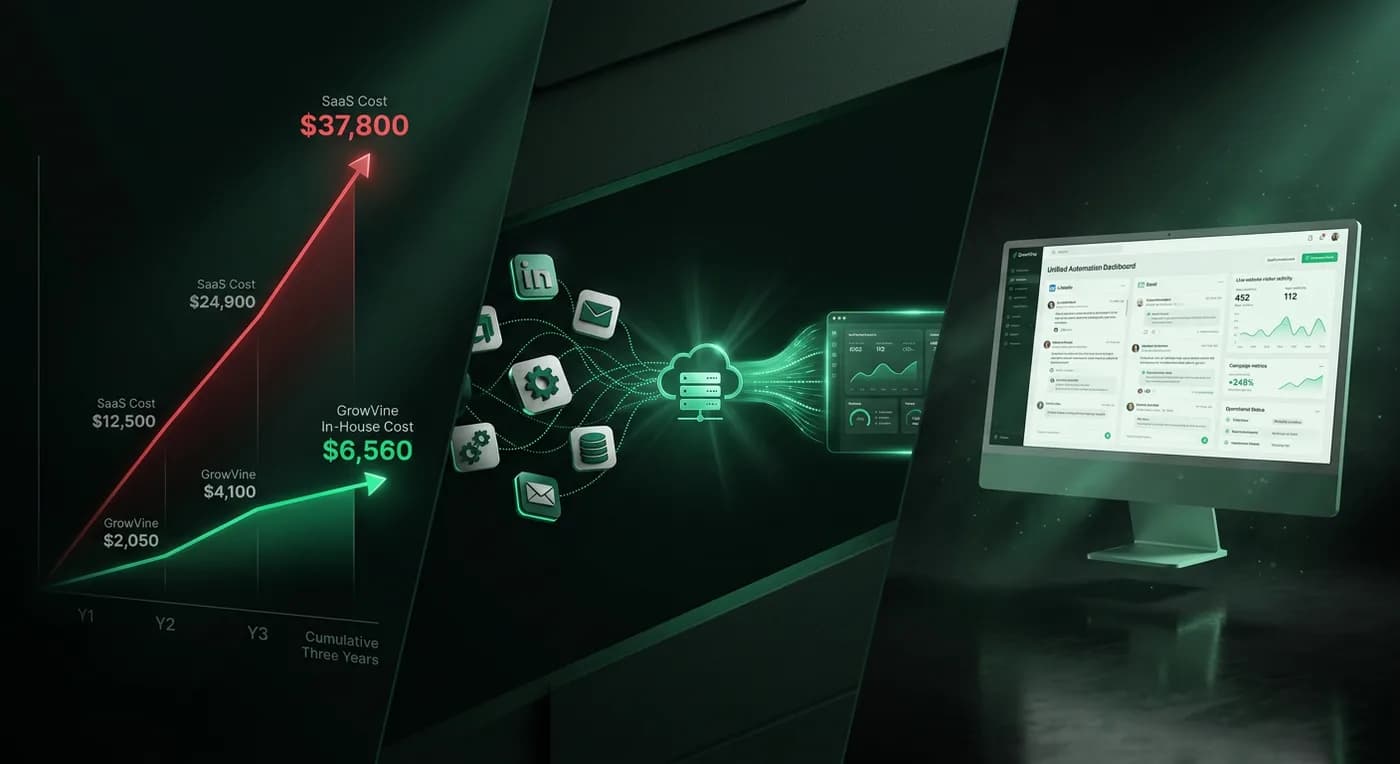
B2B Automation in 2026: How Smart Companies Are Replacing Manual Outreach (and SaaS Bills)
Jul 14, 2026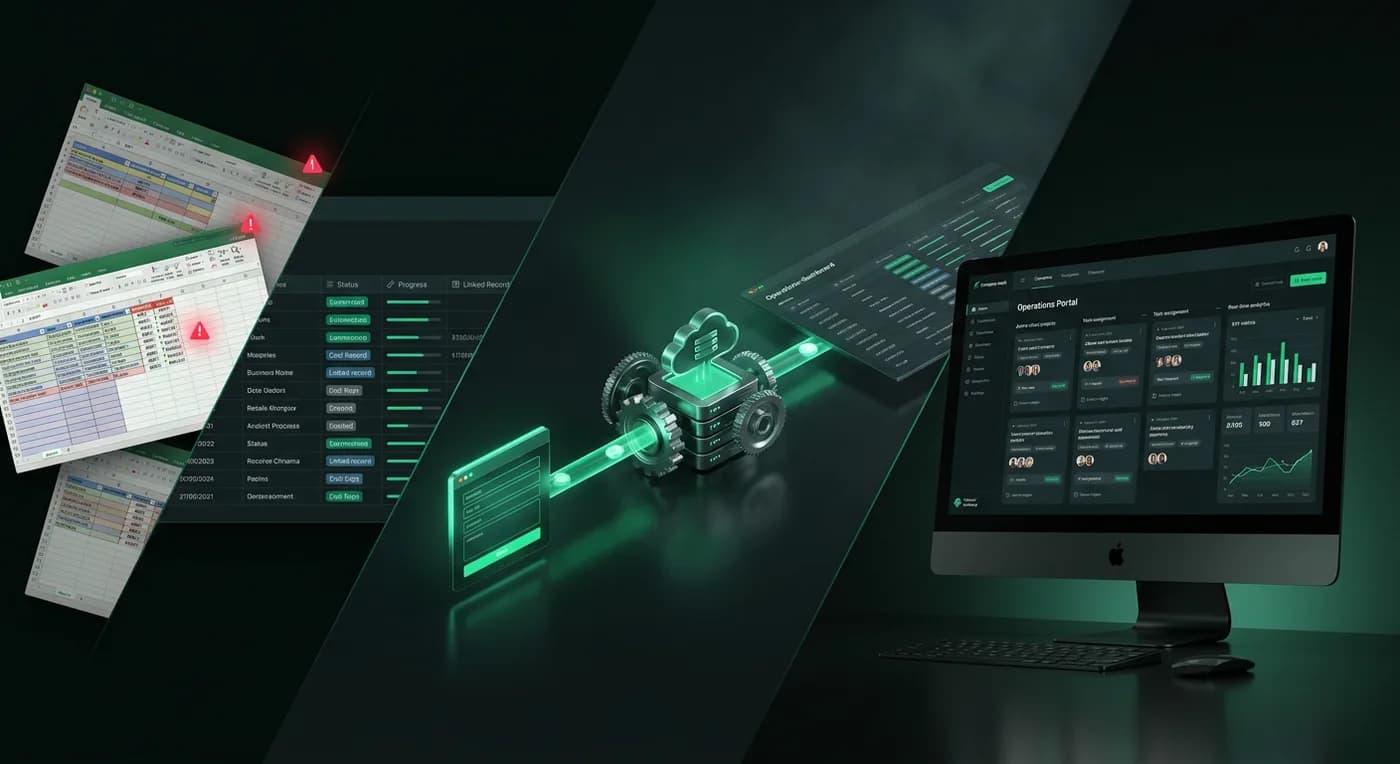
From Spreadsheets to Systems: When Your Business Has Outgrown Manual Workflows
Jul 13, 2026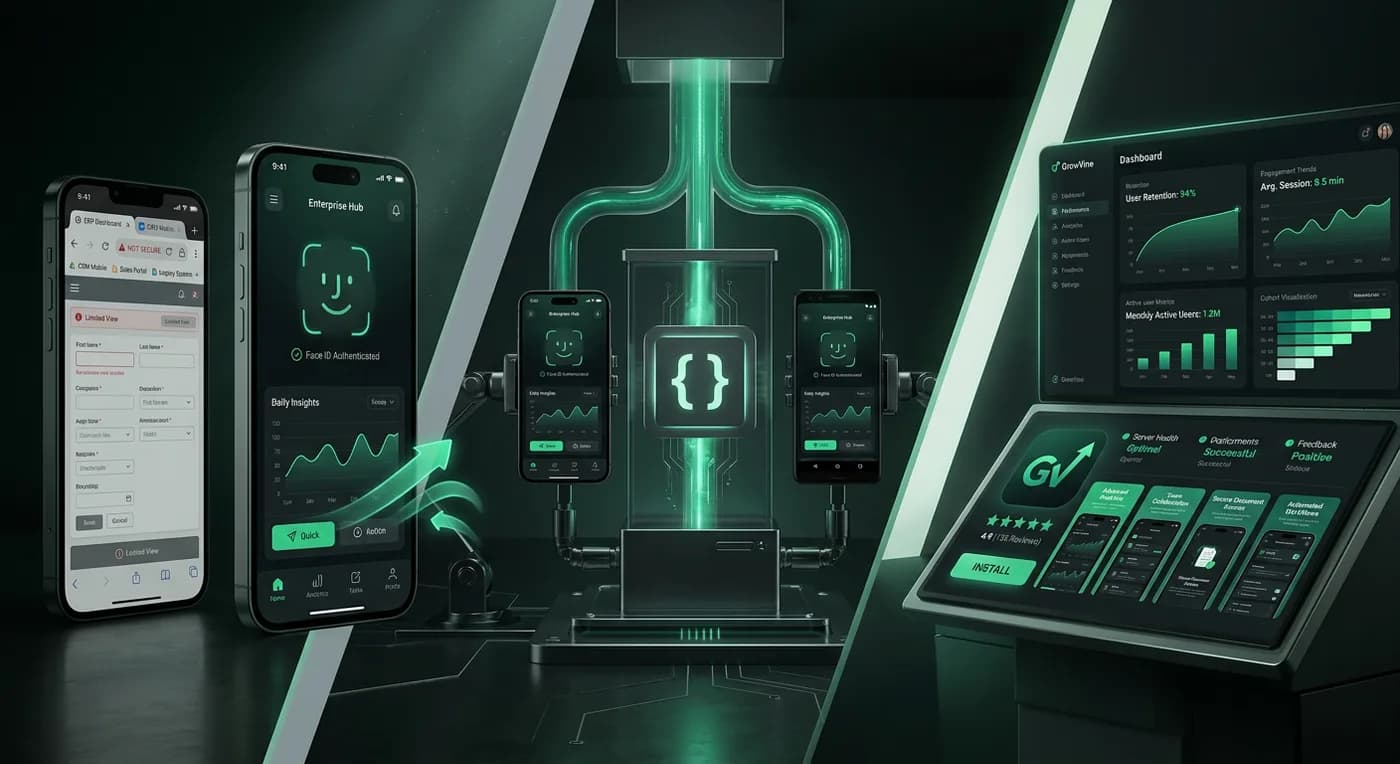
Building a Mobile App for Your Business: What to Know Before You Start
Jul 13, 2026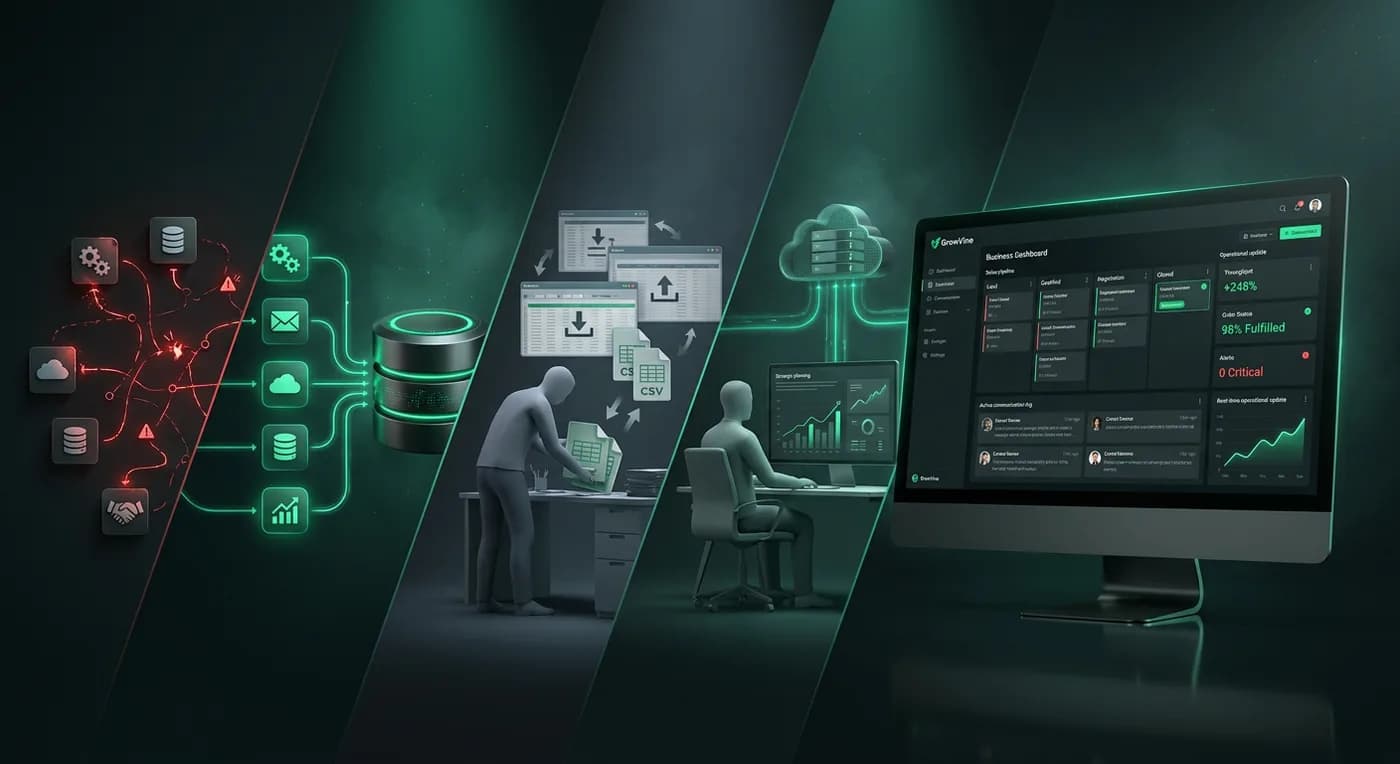
The Real Cost of Disconnected Tools: How Multiple Vendors Quietly Kill Your Growth
Jul 13, 2026Stay Updated
Subscribe to our newsletter and get the latest insights straight to your inbox.