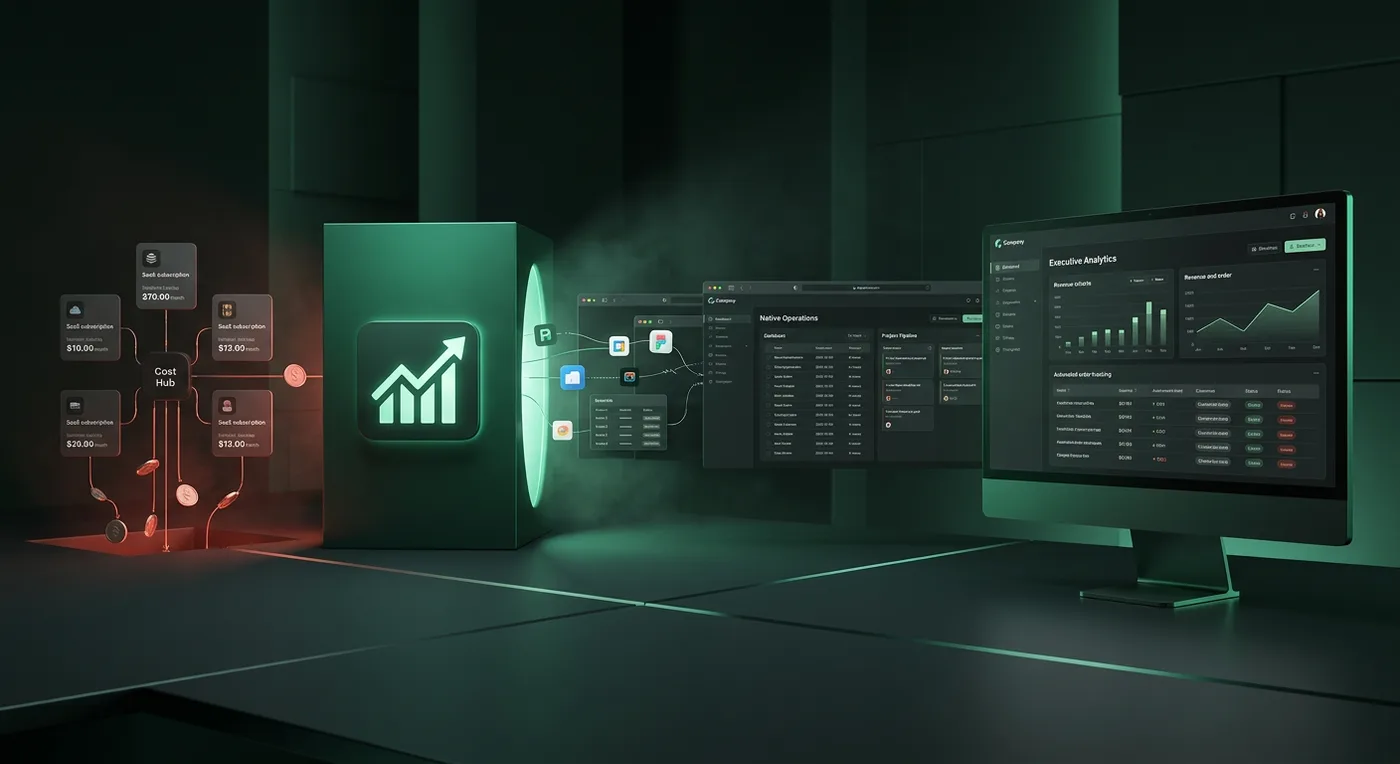
Custom Software vs SaaS: When Building Your Own Actually Makes Sense
The standard advice says never build custom software if you can rent SaaS for $49/month. But as your business scales, that cheap tool becomes a $500/month trap. Here's how to know when it's time to stop renting and start owning.

If you are running a growing business, your operational tech stack is likely held together by a dozen different Software-as-a-Service (SaaS) subscriptions.
For years, the standard advice given to non-technical founders has been clear: Never build custom software if you can rent it for $49 a month. On paper, SaaS looks like an unbeatable deal. It requires no upfront development capital, launches instantly, and handles its own server updates.
But as a business scales past its early stages, a strange shift occurs. That cheap $49/month tool turns into a $500/month tool because of user seat licenses. Then you realize it doesn't natively talk to your other tools, so you spend thousands hiring specialists to build fragile API bridges. Eventually, you realize your core, unique business workflows are being forced to warp and bend just to fit into the rigid limitations of a software template you don't even own.
In 2026, the economic landscape of software has fundamentally evolved. With modern architecture and rapid deployment frameworks, building proprietary internal software is no longer an exclusive luxury reserved for Fortune 500 companies.
How do you know when it is time to stop renting off-the-shelf software and start building an asset your business owns outright? Let's break down the exact signs that indicate building custom software is the smartest financial and strategic move for your company.
The Tipping Point: When "Cheap" SaaS Becomes an Operational Tax
The primary trap of relying exclusively on SaaS is feature compromises and subscription creep.
When you first launch, adopting a generic project tracker, CRM, or inventory manager makes sense. But as your operation matures, you develop your own proprietary systems—the exact, unique ways your team handles operations, logistics, or client fulfillment that give you a competitive edge.
When you force your team to use rigid SaaS tools, you hit three massive bottlenecks:
The "Workaround" Penalty: Your team starts wasting hours manually copying data from one dashboard to another, or managing critical business logic inside fragile, bloated spreadsheets because the SaaS tool "just doesn't do that".
Growth Punishment (Per-Seat Pricing): SaaS companies make money by charging you per user, per month. The larger your team grows, and the more successful your business becomes, the more heavily you are financially penalized just for giving your staff access to their work tools.
Zero Asset Value: You can pay a SaaS vendor for ten years, but the moment you stop paying their monthly subscription fee, your data is locked, your tools disappear, and you are left with absolutely zero enterprise value to show for it.
When Does Building Custom Software Actually Make Sense?
Building custom internal applications or client portals is a strategic investment. It makes absolute sense when your business aligns with any of the following three scenarios:
Your Workflow is Your Competitive Advantage: If your business operates exactly like every other competitor in your industry, generic SaaS is perfectly fine. But if your secret sauce lies in how fast you fulfill orders, how uniquely you bundle services, or how smoothly you onboard clients, you cannot run that workflow on a rigid template. Custom software allows the technology to adapt entirely to your business, rather than forcing your business to adapt to the technology.
You Want to Consolidate a Fragmented Tech Stack: If your daily operations require your team to hop between an email tool, a standalone database, a legacy portal, and an external tracker, you are bleeding efficiency through a thousand tiny cuts. Building a single, unified internal hub that pulls all of these functions into one clean dashboard instantly kills operational friction.
You Plan to Monetize the Tool Later: Many of the most successful SaaS products on the market today didn't start as software companies. They started as service businesses, agencies, or logistics operations that built an internal tool to solve their own headaches. Once they realized how powerful their custom engine was, they white-labeled it and sold it to their industry—turning an operational cost into a massive new revenue stream.
Shifting From Operational Overhead to Compound Growth
At GrowVine, our core mission is taking ambitious companies From Vision to Growth. We don't look at technology as just a collection of code lines—we look at it as a permanent engine designed to drive measurable business outcomes.
Whether we are engineering custom internal systems to streamline operations or completely optimizing front-end infrastructure for digital storefronts, our focus remains on speed, technical SEO performance, and flawless execution. This meticulous approach to system architecture is exactly how we have helped clients achieve outstanding results, including driving a 40% increase in online sales alongside top-tier technical platform optimization.
When you build and deploy custom software on your own secure cloud servers, you are no longer paying an endless monthly rental tax to a third-party vendor. You are investing in your company's own core infrastructure and building intellectual property (IP) that increases the overall valuation of your entire enterprise.
Stop Renting Your Core Business Infrastructure
If your team is currently bogged down by manual workarounds, if you are tired of watching your margins shrink due to compounding per-seat SaaS bills, or if you feel limited by off-the-shelf software, it is time to look at an alternative.
You don't need to be a technical genius to own a powerful software asset. You just need a partner who understands how to transform your manual operational vision into scalable, high-performance tech.
Ready to explore what an owned, custom solution looks like for your business operations? Book a 30-minute system consultation with GrowVine today. We will look at your current SaaS stack, map out your workflows, and show you exactly how an in-house asset can cut long-term costs while compounding your operational growth.
About the Author
Popular Posts
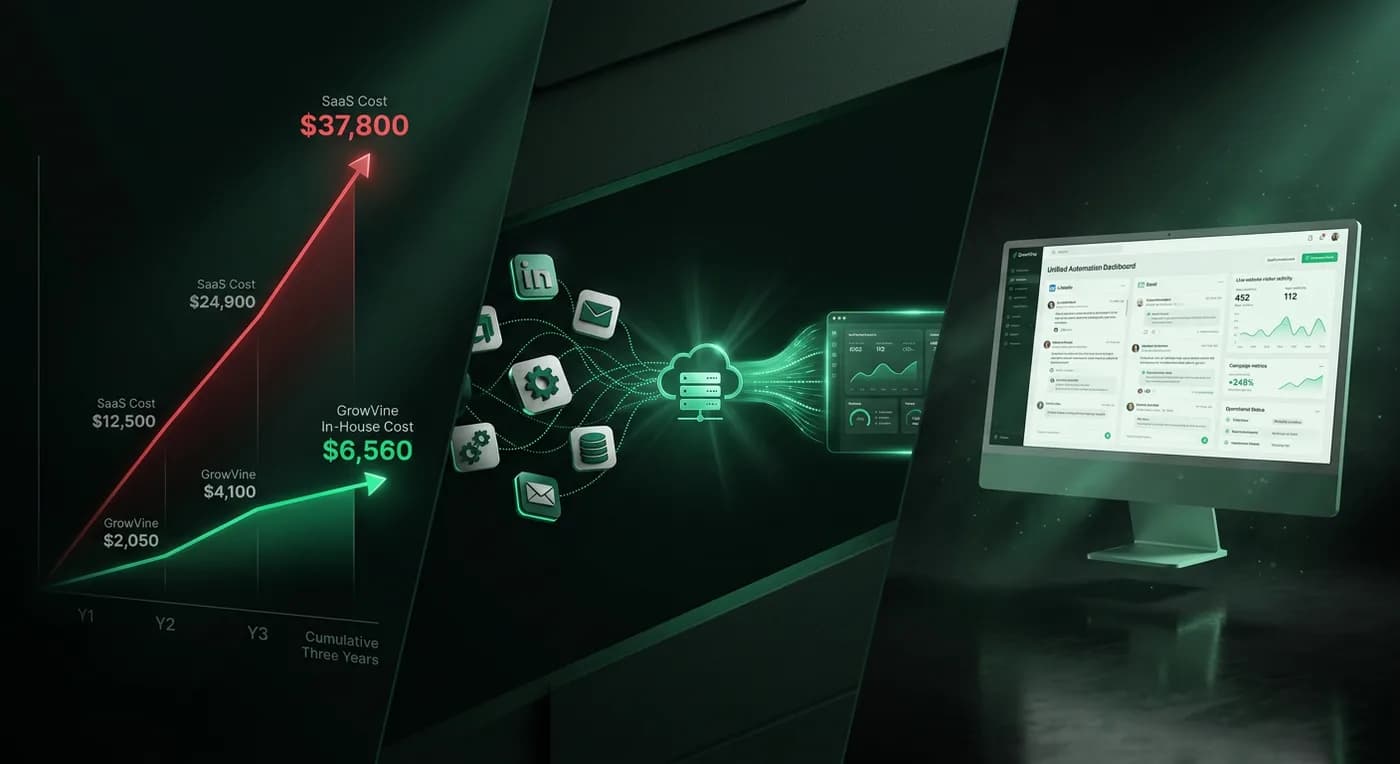
B2B Automation in 2026: How Smart Companies Are Replacing Manual Outreach (and SaaS Bills)
Jul 14, 2026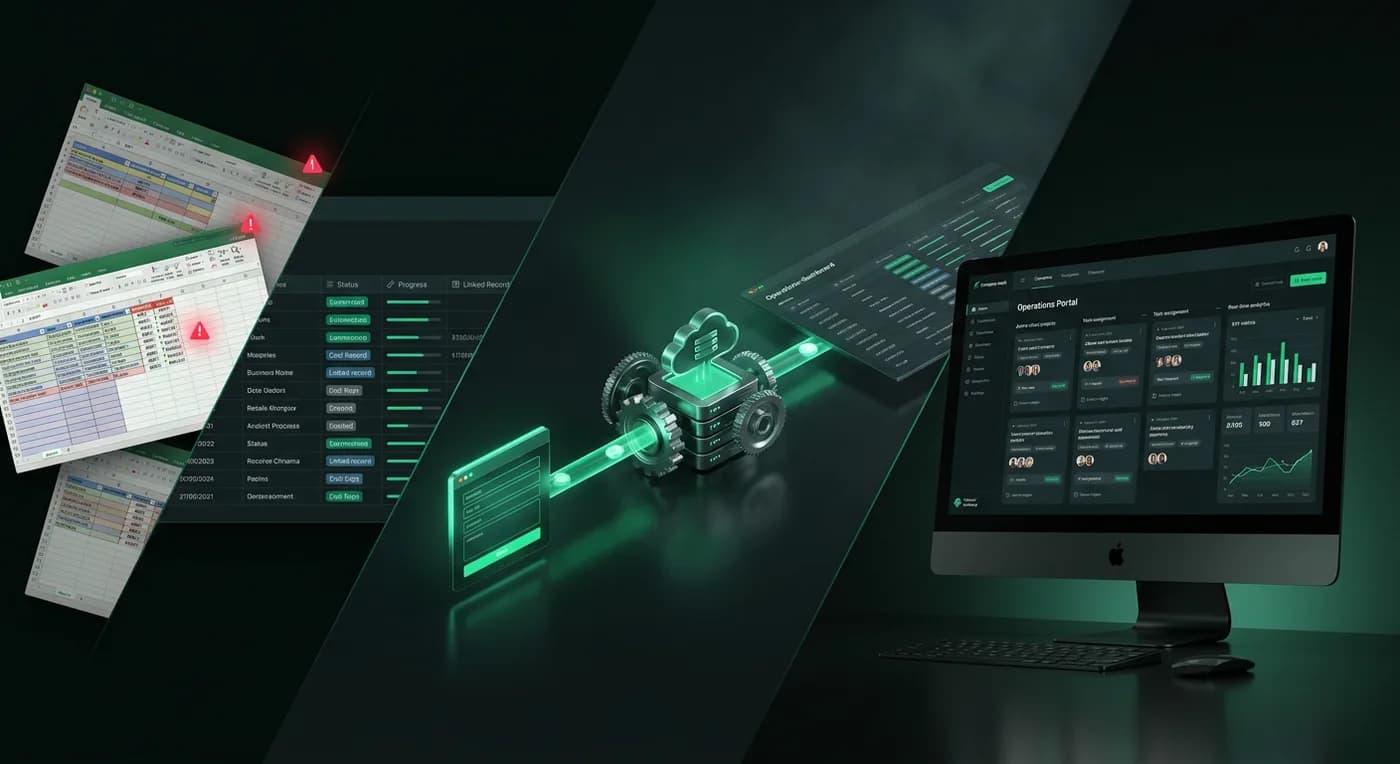
From Spreadsheets to Systems: When Your Business Has Outgrown Manual Workflows
Jul 13, 2026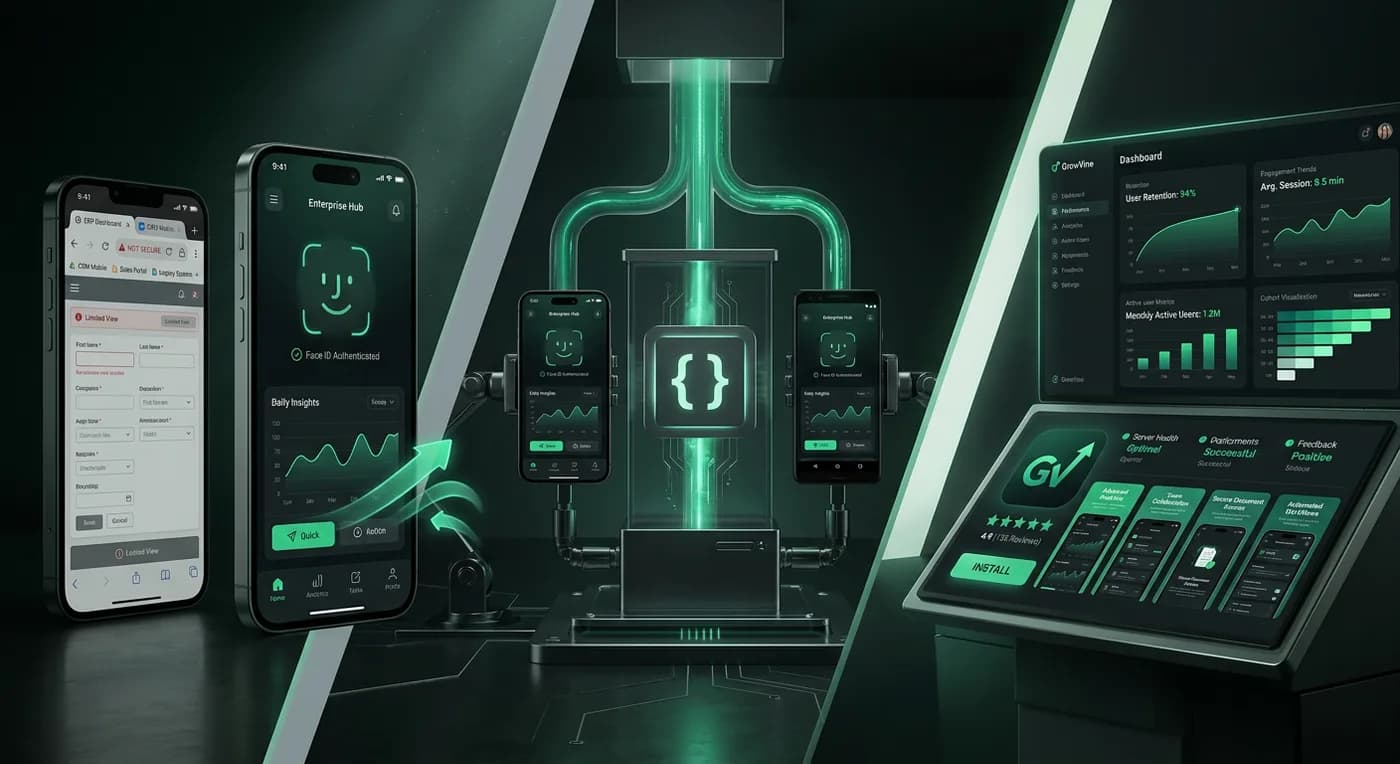
Building a Mobile App for Your Business: What to Know Before You Start
Jul 13, 2026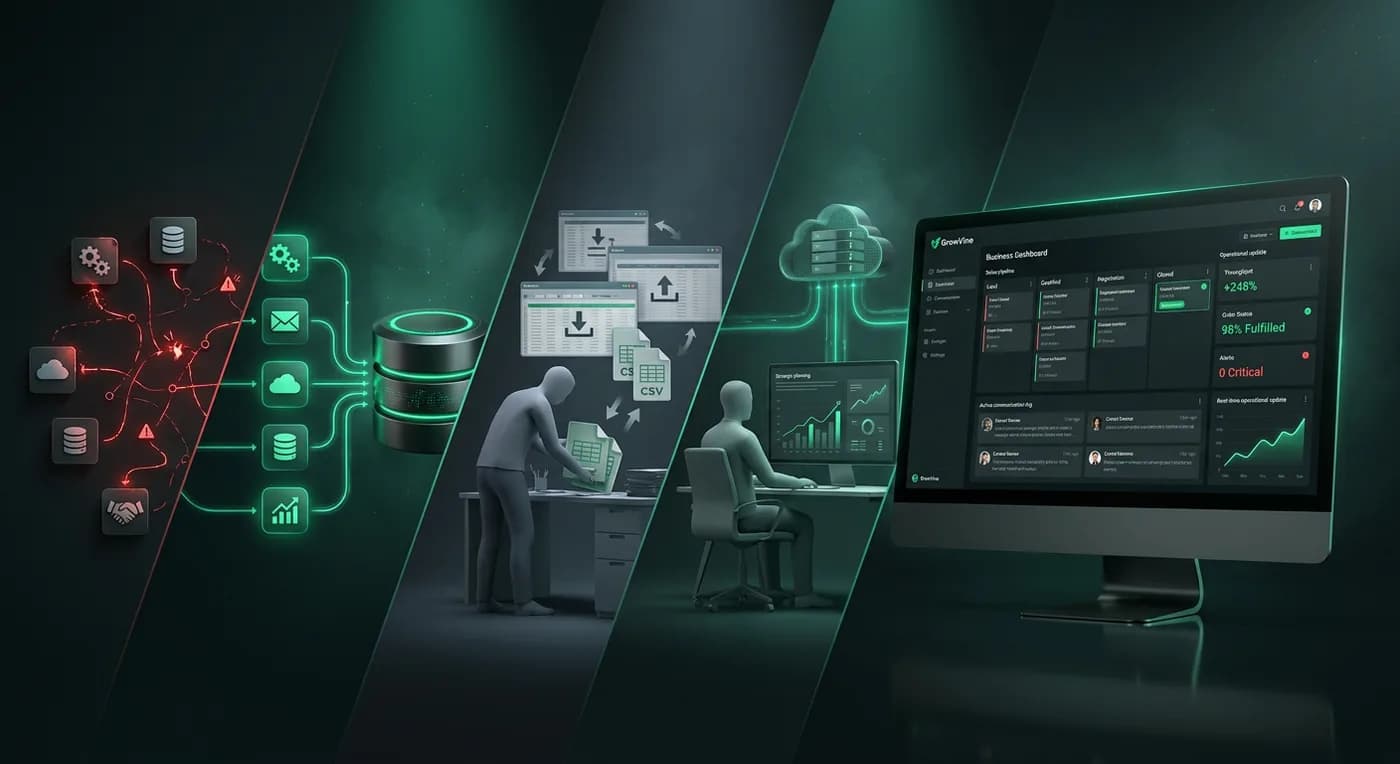
The Real Cost of Disconnected Tools: How Multiple Vendors Quietly Kill Your Growth
Jul 13, 2026Stay Updated
Subscribe to our newsletter and get the latest insights straight to your inbox.